
By Randy Mootooveran - October 20, 2025
Great stories are often inspired by real-world issues, but many people today care more about the writer’s stances on said issues than what their work stands for by itself.
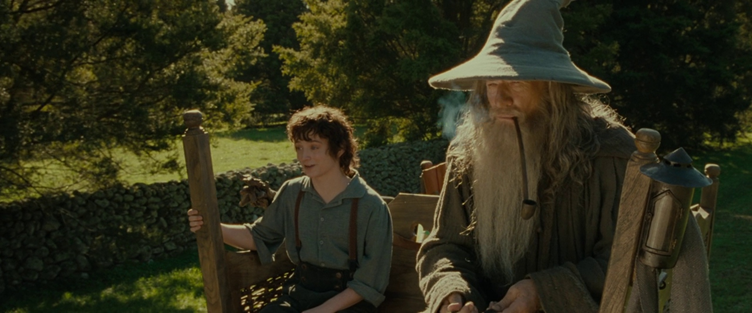
(Image from FilmGrab, Fellowship of the Ring page)
J. R. R. Tolkien, the legendary author behind The Lord of the Rings, was once asked whether his books were a direct analog to his experiences in World War I. It’s a fair assumption, given Frodo’s journey from a wide-eyed innocent to a haunted veteran mirror the struggles of those fortunate enough to survive that brutal conflict. Over the years, people have drawn parallels between Tolkien’s work and other societal issues, like the War on Terrorism, nature vs industrialization, and women’s rights through Eowyn’s story.
There’s certainly subtext about all these ideas in The Lord of the Rings, but on the subject of the story itself being a direct allegory, Tolkien had this to say:
“I actually dislike allegory in all of its manifestations, and always have done so since I grew old and wary enough to detect its presence. I much prefer history - true or feigned - with its varied applicability to the thought and experience of others. I think many confuse applicability with allegory, but the one resides in the freedom of the reader, and the other in the purposed domain of the author.”
J. R. R. Tolkien, The Fellowship of the Ring
A common complaint across modern books, movies, TV shows, and even video games has been creators using these media to proselytize their beliefs through their plots and characters. Many of them come across as hollow and sanctimonious, the very things Tolkien despised about allegories. Instead of judging stories based on their storytelling, worldbuilding, or even aesthetics, many critics and audiences instead debate online over whether they’re tied to contemporary issues. It's reached the point where entertainment discourse has become just as heated as political discourse, except the discussion has little to do with the story itself.
In this climate, it’s no wonder that pure escapist fiction rarely gets made anymore.
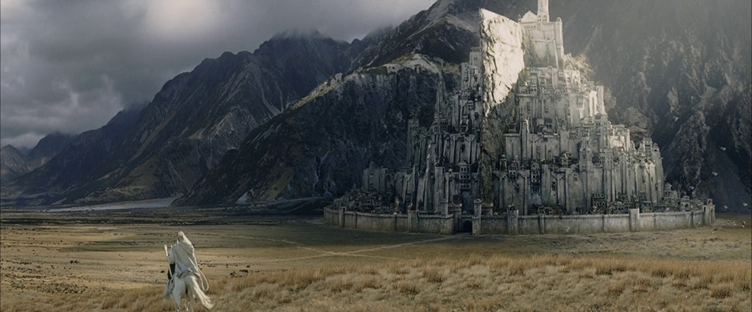
(Image from FilmGrab, Return of the King page)
All entertainment reflects the era in which it was created, but that doesn’t mean it can’t be transcendent of it.
Every writer puts some degree of their experiences and beliefs into their work. However, only the best writers know how to give their creations enough individuality to stand on their own. People loved The Lord of the Rings on release for its epic narrative, noble characters, and the rich history of Middle-earth, and even after 71 years, that’s primarily what draws new readers to it. Whatever deeper subtext Tolkien may or may not have intended has become irrelevant now that he’s unable to comment on any political or societal matters past 1973.
None of this is to say that entertainment can’t be well-written and comment on hot-button topics at the same time. Classic movies such as The Hunt for Red October or Schindler’s List provide brilliant insight into the paranoia of the Cold War and the tragedy of the Holocaust, respectively. There’s also a new drama on Amazon Prime Video called Countdown, which follows an FBI task force’s efforts to stop a domestic terrorist threat in modern-day California. All 3 take heavy influence from real-world events and build stronger narratives for it.
That being said, their storytelling would still be solid if the plot and characters were swapped out for a fantasy or science fiction setting. Influences are best served as icing atop a solid narrative, not a substitute for the story itself.
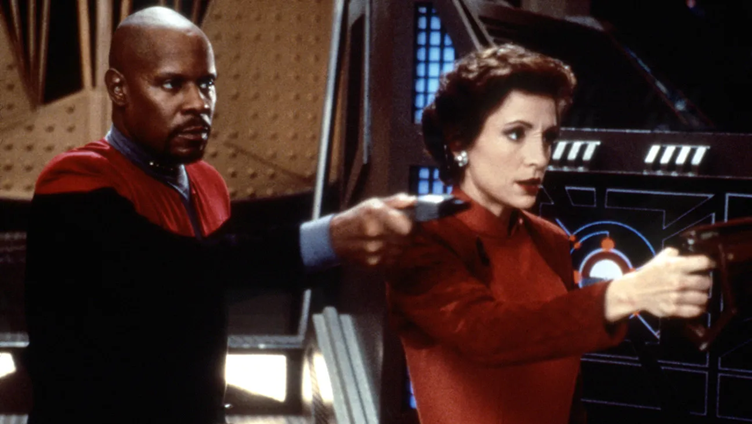
(Image source: The Hollywood Reporter, Star Trek Deep Space Nine TV Feature)
Weaving real-world politics into compelling stories was what Star Trek was famous for, but the writers still had to make good scripts to get their points across effectively.
Countless Star Trek episodes comment on real-world issues, ranging from equal rights, war and economics. However, just like with The Lord of the Rings, the politics serve to enrich the universe by association. While these talking points provide the backbone for an episode’s plot, it’s still dependent on a compelling species and attachment to the main cast to carry it.
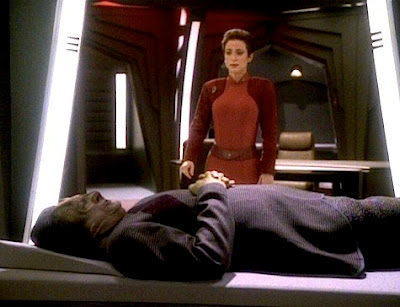
(Image source: Addicted to Star Trek, Duet Review)
One of the best examples of this practice is the episode Duet from Star Trek: Deep Space Nine. It follows First Officer Kira’s efforts to expose a man from the Cardassian race as an infamous war criminal responsible for murdering hundreds of her own people. The plot was reportedly inspired by the 1975 film The Man in the Glass Booth, which followed a former WWII German soldier turning himself in to be judged by the Jewish families of those he helped dispatch.
Despite both stories being entirely fictional, anyone familiar with the Nuremberg Trials can see how DS9 uses historical familiarity with the event to address themes of prejudice, trauma, and vengeful justice with its characters. By the end, Kira and the Cardassian man develop a compelling bond that goes beyond its inspirational roots. Since both characters are aliens, the writers are free to explore how Kira’s righteous anger blinded her and neither side can resolve their pasts unless they learn to forgive each other.
Reducing stories like Star Trek and The Lord of the Rings to their broadest themes only dilutes their impact, along with the hard work of their creators. Frodo’s journey and Kira’s arc lose all their meaning when summed up as “traumatized war veteran” or “Holocaust survivor.” Plenty of those stories already exist in the real world, but it’s how their creators present them that makes them resonate with people for many years since their inception, and it’s why they’ll continue to resonate long after those inspirations become forgotten memories.
That’s the power of a truly great story.
